
 By
By 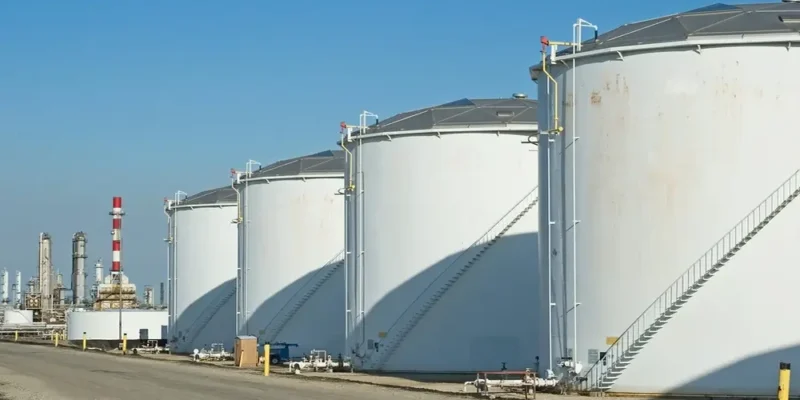
A closer look at how two storage tank standards diverge – and why the difference matters more than a single pressure rating.
Walk through almost any refinery, fuel terminal, or chemical plant, and you’ll notice two families of large steel tanks standing side by side. Some are flat-bottomed cylinders with open or coned tops. Others sit lower and rounder, built to hold their contents under a bit more pressure than the tanks next to them.
Both trace back to the same source, but they follow different rulebooks. These are API 650 and API 620 tanks, and the distinction between them shapes everything from wall thickness to what a facility is legally permitted to store inside. For engineers, procurement teams, and plant managers evaluating a new storage project, knowing which standard applies isn’t a formality – it determines cost, lead time, and, most importantly, safety.
Two Standards, One Shared Origin
Both codes come from the American Petroleum Institute, the trade association behind most of the engineering standards governing oil and gas infrastructure in the U.S. The full text of API Standard 650 is maintained and periodically revised by a committee of tank builders, purchasers, and regulators – the same is true of API 620.
Despite sharing that lineage, the two standards were written to solve different problems. API 650 governs tanks that operate at or near atmospheric pressure. API 620 exists for tanks that need to hold somewhat more pressure than that, usually because of the product being stored, the temperature it needs to stay at, or both.
What API 650 Tanks Are Built For
API 650 is the default standard for large, vertical, cylindrical, flat-bottomed tanks – the kind found storing crude oil, diesel, gasoline, biofuels, or treated water at a refinery or terminal. These tanks run at pressures close to atmospheric, with an internal pressure ceiling of 2.5 psig.
That low ceiling isn’t really a limitation so much as a design philosophy. Tanks built to API 650 are engineered so that if internal pressure ever climbs past what the roof can handle, the roof-to-shell seam gives way first, venting pressure rather than letting the tank body fail. It’s a deliberate safety feature, not an afterthought.
Temperature range is generous by comparison, typically running from about -40°F up to 500°F, which is part of why API 650 covers such a wide slice of everyday industrial storage. Most of the aboveground tanks a given industry actually deals with – from agricultural operations to retail fueling stations – fall under this standard.
Where API 620 Takes Over
API 620 picks up where API 650 leaves off. It applies to large, welded, low-pressure tanks that need to handle higher internal pressure, up to 15 psig, or far colder temperatures, down to roughly -325°F in some configurations. That combination makes it the standard of choice for refrigerated and cryogenic storage – liquefied natural gas, ammonia, ethylene, and similar products that need to stay cold and somewhat pressurized to remain in liquid form.
Because of the pressures and temperatures involved, API 620 tanks often call for different materials than their API 650 counterparts. Carbon steel is still common, but low-temperature nickel alloys and austenitic stainless steel appear more frequently once a project moves into cryogenic territory. Minimum wall thickness is similar between the two codes, but the engineering analysis behind an API 620 design tends to be more involved, simply because the margins are tighter.
Pressure Is the Headline, But Not the Whole Story
It’s tempting to reduce the comparison to a single number – 2.5 psig versus 15 psig – and stop there. That figure matters, but it’s shorthand for a broader set of design decisions.
Temperature range carries just as much weight. A tank storing diesel at ambient conditions has very different structural needs than one holding LNG at -260°F. Size matters too: API 620 tanks are frequently larger, sometimes holding capacities well beyond a typical API 650 installation, and they’re usually field-erected rather than shop-built given their scale.
None of this makes one standard “better” than the other. They’re built for different jobs, in much the same way a rated pressure vessel and an atmospheric tank both have a place on the same site.
Matching the Standard to the Application
In practice, most facilities don’t choose a standard in the abstract – the product being stored makes the decision for them. Fuel terminals, water treatment plants, and agricultural operations typically need API 650 tanks because their contents don’t require elevated pressure or extreme cold. LNG import terminals, ethylene plants, and certain chemical processors need API 620 because their products simply won’t stay liquid without it.
Manufacturers spend real time walking clients through this evaluation before fabrication starts. Companies such as Tex Tanks, which works across fuel, chemical, and industrial storage projects, typically begin by confirming the stored product, its required pressure and temperature range, and the site’s regulatory obligations before recommending a design path.
That last point is worth pausing on. Aboveground tanks storing petroleum products in the U.S. often fall under the EPA’s Spill Prevention, Control, and Countermeasure rule in addition to whichever API standard governs construction. The two sets of requirements work together – one governs how the tank is built, the other governs how spills are prevented and managed once it’s in service.
Life After Construction
Neither standard ends once a tank is welded and tested. API 650 and API 620 tanks both eventually need in-service inspection, repair, or alteration, and that’s where API 653 comes in – it provides the maintenance and integrity requirements that keep an aging tank safe to operate. A facility that built to code once still has to keep meeting it for the life of the asset.
Choosing Between Them
If there’s a practical takeaway, it’s this: start with the product, not the tank. Define what’s being stored, at what pressure, and at what temperature, and the applicable standard usually becomes clear on its own. From there, an experienced fabricator familiar with custom-engineered API tank systems can help translate those requirements into a design that meets code, fits the site, and holds up for decades.
Getting this decision right at the outset saves money and headaches later. A tank built to the wrong standard isn’t just a compliance problem – it’s a safety one, and in this industry, that’s exactly what the codes exist to prevent.









Comments