
 By
By 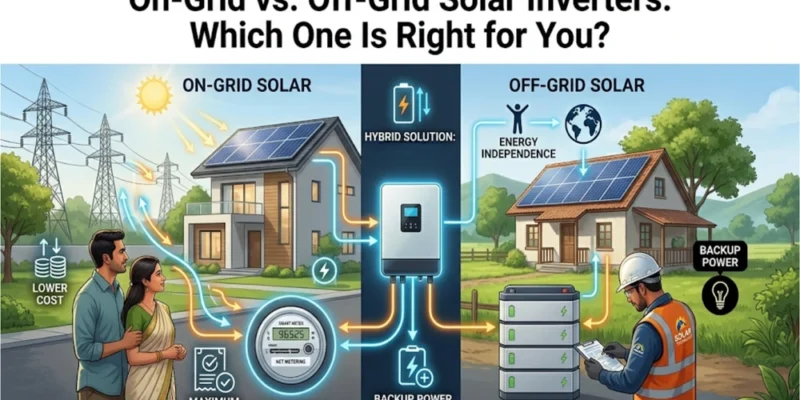
Anyone who has started looking into solar panels has probably run into this question fairly quickly. On-grid or off-grid? And if you have spent any time reading about it, hybrid systems enter the picture, too, which only adds to the confusion.
Your solar panels produce DC electricity. Your home runs on AC. The solar inverter sits in between and handles that conversion. Where things differ is what happens with the power once it has been converted.
On-Grid Inverters
This is what most Indian households end up going with, and for good reason.
An on-grid inverter ties your solar system to the electricity grid. Your panels run your home through the day. When they produce more than you are using, that extra power flows back into the grid and through net metering, you get credits on your electricity bill. Over a year, those credits make a noticeable difference.
Because the grid acts as your backup, you do not need batteries, which takes a big chunk out of the total cost. The system is simpler to install, easier to maintain, and many on-grid inverters today operate at over 98% efficiency.
One thing worth knowing is that on-grid systems shut down during power cuts. This is a safety requirement. In areas with a stable grid supply, it rarely matters, but in areas with frequent outages, it is worth considering.
Off-Grid Inverters
Off-grid setups work completely independently. Your panels charge a battery bank through the day, and that stored power carries you through the night or bad weather. For remote locations where the grid does not reach, this is often the only workable option. The honest downside is cost; batteries and additional components add significantly to what you spend upfront.
Hybrid Inverters
A hybrid inverter keeps you connected to the grid but adds battery storage as well. You get net metering benefits during normal operation and backup when the grid goes down. For households dealing with regular outages, this is a sensible middle ground.
If your home has reasonable grid access, on-grid is where most people should start. Lower cost, faster payback, and net metering work in your favour. Off-grid is for when the grid genuinely is not an option. A hybrid is for when you want a safety net without giving up grid benefits.
Waaree Energies has been part of India’s solar story long enough to understand what actually works on the ground. With a global manufacturing capacity of 25.8 GW, they make inverters for on-grid, off-grid, and hybrid setups, and have done it across enough homes and businesses to know Indian conditions inside out. If you are figuring out where to start, they are worth a serious look.








Comments