
 By
By 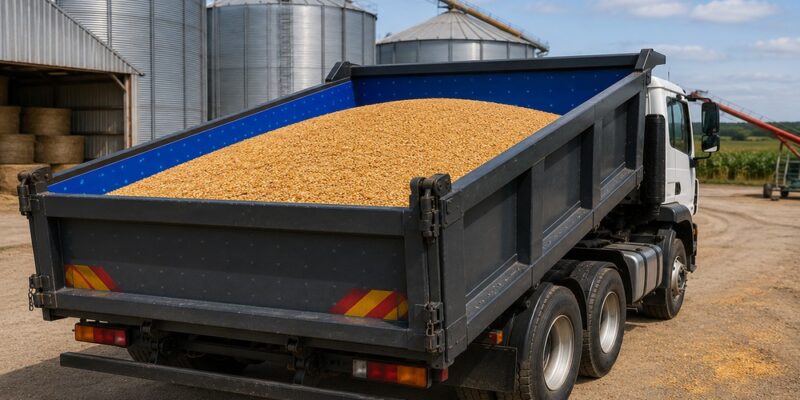
At a Glance
- Agricultural trucks operate in conditions that place sustained stress on internal truck bodies, affecting discharge behaviour, stability and maintenance requirements.
- Durable bed liners help manage this exposure by supporting smoother unloading and protecting high-stress areas.
- The result is less unplanned downtime and longer, more reliable truck body service life.
Agriculture trucks routinely transport abrasive, wet and dense bulk materials across varying terrain and seasonal conditions.
Repeated loading and tipping expose internal truck bodies to abrasion, load pressure and concentrated wear, particularly in high-wear areas such as floors, sidewalls and tailgates. As these internal surfaces wear, material flow becomes less consistent, increasing unloading time and variability between cycles.
Managing the condition of these surfaces is therefore central to maintaining predictable operation. Durable bed liners provide this control by limiting direct contact between the load and the truck body, helping maintain stable discharge behaviour and consistent performance over time.
The following sections outline the operational reasons why durable truck body liners are critical to the performance of agricultural trucks.
Supports Consistent Material Flow
Abrasive agricultural materials, such as grain, fertiliser, lime and feed, generate friction as they move across truck bodies during loading and discharge. As steel surfaces wear, friction increases and material flow becomes less predictable, particularly when loads are wet or compacted.
Durable UHMWPE liners introduce a stable, low-friction internal surface that allows material to slide and release more uniformly. By reducing resistance between the load and internal surfaces, liners help support consistent discharge across varying load types and operating conditions, while also slowing further surface degradation.
Protects Truck Bodies from Structural Damage
In agricultural operations, trucks complete frequent load-dump cycles as material is moved between paddocks, storage and processing points. During this loading and unloading cycle, bulk material repeatedly loads and settles against the same areas of the truck bodies, concentrating force around welded joints where stress naturally accumulates. Over time, this repeated contact causes dents and deformation. As the internal surfaces become uneven, stress concentrates in these areas, accelerating wear.
Truck bed liners protect against this damage by distributing load pressure and reducing localised stress. The liner helps absorb loading forces and distribute them across a wider surface area, reducing force transfer into the steel and dampening vibration during transport and unloading.
By preserving smoother internal surfaces, liners help maintain structural integrity and slow the progression of fatigue-related damage that can otherwise drive early repairs or body replacement.
Improve Tipping Stability and Unloading Safety
Sometimes materials do not release cleanly when a truck is tipped, requiring operators to raise the body higher to achieve full discharge. As tipping angles increase, stability decreases, particularly when unloading on soft or uneven ground conditions. When accumulated material finally discharges, it can release suddenly, increasing risks during unloading.
UHMWPE truck bed liners support smoother, more predictable material flow, allowing loads to clear at lower tipping angles. This improves unloading stability and reduces the likelihood of sudden load release. More reliable discharge also minimises the need for operators to manually clear residues, reducing the risk of slips, falls and operational hazards during daily operations.
Prevent corrosion from Moisture and Chemicals
Many agricultural materials contain moisture, fertiliser residues or organic matter that remain in contact with internal steel surfaces after unloading, particularly in corners and low-visibility areas. This prolonged contact accelerates surface corrosion, which may remain unnoticed until wear becomes visible. When different materials are carried in the same truck, leftover residue can also contaminate the next load.
A bed liner creates a protective barrier between the material carried and the underlying steel. Because the liner surface is smooth and non-porous, material is less likely to adhere and is easier to clear between loads. This helps reduce corrosion exposure, maintain cleaner discharge surfaces and minimise the risk of material carry-over.
Extend Service Life and Reduce Downtime
In agricultural haulage operations, excessive internal wear and corrosion are major contributors to avoidable downtime. As truck bodies degrade, clean-outs, patching and inspections become more frequent, often requiring vehicles to be taken out of service during peak periods such as harvest or feeding cycles.
When these issues are left unaddressed, operators may be forced to replace truck bodies earlier than expected, even though the underlying structure still has usable service life remaining.
By limiting abrasion, loading stress and corrosion at the source, durable bed liners help maintain smoother, more consistent internal truck body surfaces over time. Slower wear progression reduces the need for reactive repairs, supports maintenance planning and helps keep equipment in service and performing reliably during high-demand periods.
In agricultural trucking, internal body condition directly affects safety, reliability and operating continuity. Uncontrolled wear, corrosion and inconsistent discharge create compounding issues that increase risk, disrupt schedules and shorten usable body life.
Installing durable premium-grade UHMWPE liners like OKUSLIDE® helps control these issues by managing how materials interact with the truck body. By limiting abrasion, loading stress and corrosion and supporting more predictable discharge, liners help keep trucks in service longer and operating more reliably.
For agricultural fleets, this shifts body protection from a reactive maintenance response to a practical measure that supports safety, continuity and long-term asset performance.






Comments