
 By
By 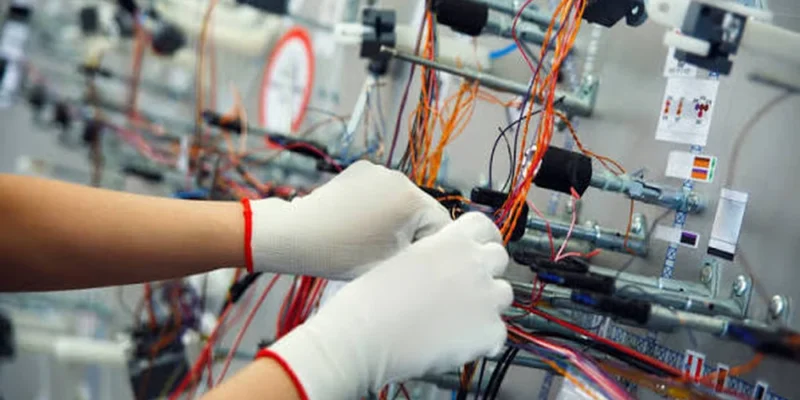
The wiring harness is one of the most critical and often underappreciated components in modern vehicles, industrial machinery, medical equipment, and consumer electronics. A wiring harness is a structured assembly of wires, cables, connectors, and protective conduits organised into a single unit that routes electrical power and signals between the components of a system. As systems grow more complex and the number of electrical connections in vehicles and industrial equipment continues to increase, the quality and reliability of the wire harness assembly becomes progressively more consequential for the performance and safety of the finished product. Understanding what wiring harness manufacturers in India produce and how to evaluate a wire harness manufacturing company in India helps procurement engineers and OEM sourcing teams make reliable supply decisions.
What is a wiring harness?
A wiring harness consolidates the individual wires that would otherwise be routed separately through a product into a single, organised, and protected assembly. The harness includes the conductors that carry current and signal, the connectors and terminals that make the electrical connections at each end, the protective sleeving, conduit, and tape wrapping that protects the conductors from mechanical damage, heat, and chemical exposure, and the mounting hardware that secures the harness in the correct position within the product.
The functional advantages of a consolidated wiring harness over individual point-to-point wiring are significant:
- Reduced assembly time: a single harness assembly replaces dozens or hundreds of individual wiring operations during product assembly, reducing the time and skill required for electrical assembly and the risk of connection errors.
- Improved reliability: the organised, protected construction of a quality wire harness reduces the risk of insulation abrasion, connector pull-out, and the intermittent connection failures that individual wire routing is prone to in vibration-intensive environments.
- Simplified maintenance: a harness with clearly labelled connectors and organised routing enables faster fault diagnosis and repair than a tangle of individual wires whose routing through the product is difficult to trace.
- Space efficiency: the consolidated harness occupies less volume than equivalent individual wiring and can be routed through tight spaces more effectively.
What industries use wiring harnesses?
Wiring harness manufacturers in India supply harness assemblies across a wide range of industries:
- Automotive: the largest consumer of wiring harness assemblies globally, with modern passenger vehicles containing between 2,000 and 4,000 individual connections in a single harness system. Automotive harnesses must meet stringent standards for vibration resistance, temperature cycling, fluid resistance, and the electromagnetic compatibility requirements of modern vehicle electronic systems.
- Commercial vehicles and two-wheelers: trucks, buses, tractors, and two-wheelers each have specific harness requirements reflecting the duty cycle, environmental exposure, and the electrical system architecture of each vehicle type.
- Industrial machinery and automation: control panels, CNC machines, robotic systems, and industrial automation equipment use harness assemblies that route power and signal between the control system and the actuators, sensors, and safety devices of the machine.
- Medical equipment: diagnostic and therapeutic medical devices use precision harness assemblies that must meet the cleanliness, biocompatibility, and reliability requirements of medical device standards including ISO 13485.
- Defence and aerospace: military vehicles, aircraft, and naval systems use harnesses built to highly demanding specifications for temperature range, vibration, EMI shielding, and the documentation requirements of defence procurement.
What should OEMs look for in a wire harness manufacturing company in India?
Selecting a wiring harness company in India as a long-term supply partner requires evaluation across several dimensions that go beyond initial price comparison:
- Quality management system: certification to IATF 16949 for automotive harness manufacturers, or ISO 9001 for general industrial harness supply, provides the baseline quality management assurance that OEM procurement typically requires.
- Testing capability: the crimping force testing, conductor resistance testing, high-voltage withstand testing, and the automated optical inspection capability that identifies defective assemblies before despatch.
- Custom design capability: the engineering capability to develop harness designs from electrical schematic or from the OEM’s assembly requirements, rather than only manufacturing to a provided design.
- Volume scalability: the production capacity to scale volume supply as the OEM’s production ramps, with the manufacturing systems and workforce that consistent quality at high volume requires.
- Traceability: the batch recording and component traceability that allows defective material to be identified and contained rapidly if a quality issue is discovered after delivery.
Conclusion
A quality wiring harness from a reliable wire harness manufacturing company in India is a critical enabler of system reliability, assembly efficiency, and the safety standards that end-product applications demand. Evaluating wiring harness manufacturers on quality system certification, testing capability, custom design expertise, and volume scalability produces supply relationships that serve the OEM’s long-term production requirements.
Electronic components suppliers in India can provide custom wiring harness assemblies for automotive, industrial, commercial vehicle, and specialised applications. Their capabilities may include engineering design, quality-certified manufacturing, and comprehensive testing to deliver reliable harness assemblies that meet the specific requirements of each application and customer.









Comments