
 By
By 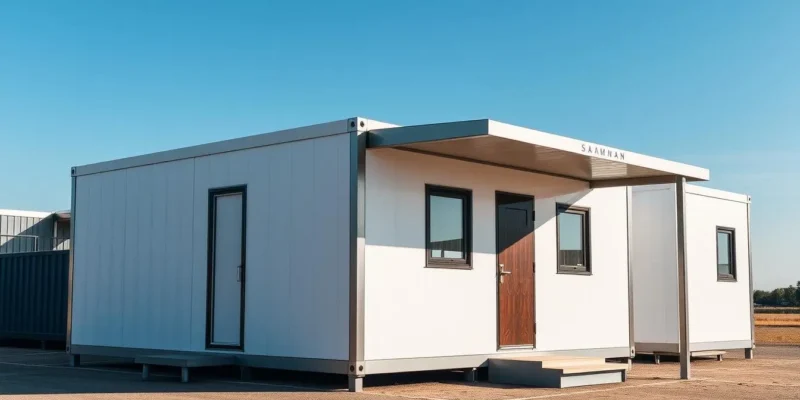
A temporary industrial building is a modular, relocatable structure that can be quickly assembled on site. These buildings offer flexible industrial space without the time, expense or permanence of conventional construction. Temporary structures vary in their materials and use, being engineered to provide secure operational or storage space, installed in days or weeks rather than months. Their adaptability makes them a practical choice when businesses need rapid deployment or scalable solutions to an industrial project.
Why does rapid deployment matter?
One of the clearest reasons to choose a temporary industrial building is when speed of deployment is critical. Traditional construction can take months or even years once planning, permits and groundworks are factored in; the exact level varies from market to market but in some places planning approval can delay major projects by years. In contrast, engineered temporary structures are manufactured off-site, then delivered and assembled on location in a fraction of the time. It is often far simpler to gain permission for a temporary structure than permanent installations, and in most cases they can be dissembled after the project is complete.
Non-industrial applications
Not all temporary structures are industrial. Rapid deployment is especially valuable in emergency response situations. For disaster relief and humanitarian aid, organisations need shelters, storage or medical facilities with minimal delay. Temporary fabric buildings and shelters can be erected quickly on uneven ground without extensive preparation, keeping critical operations going when delays would have severe consequences.
Interim Solutions During Transition
Business growth, refurbishment and unexpected site issues create changing needs that permanent buildings can’t meet efficiently. Temporary industrial buildings, such as those produced by O.B. Wiik, are most suitable when businesses need swing space. This concept is best illustrated by example:
Manufacturing expansion
A factory facing peak production may require extra workshop or storage capacity while orders grow, but without committing to a permanent extension if demand is seasonal or linked to a single order. Temporary structures give that room now, with the option to expand or reduce later.
Renovation projects
When an existing warehouse or workshop is under refurbishment or repair, temporary premises prevent downtime and keep workflows intact. The temporary structure can be erected next to the previous site, minimising the cost of transferring equipment, and be easily dissembled once the renovation is complete.
Relocation buffers
Offshoring, onshoring, and relocation to meet the needs of regional or international clients mean businesses need to be agile, especially in light manufacturing. A business on the move might need interim facilities while new premises are prepared, making a relocatable building a practical buffer. In some cases, temporary structures can be upgraded to provide a permanent solution to the relocation pressure, whereas in others they can be dissembled.
Cost and Flexibility
Temporary industrial buildings typically require lower upfront investment than permanent structures. They avoid many costs associated with traditional builds, such as foundation work and architectural fees, and often cost significantly less overall for the space they provide. The ability to rent rather than buy the structure further reduces initial capital outlay and long-term liabilities to the business.
Because they can be dismantled and relocated, temporary buildings keep future options open. If your business needs shift: downscaling, relocating operations or reallocating resources; a temporary building can follow those changes rather than becoming a stranded asset. This flexibility also plays out in configurability: clear-span interiors, customised layouts, insulation, and access mean spaces can be tailored to current operational needs without major construction, an important consideration for businesses operating in long-established industrial regions where building design does not follow the logic of the modern manufacturing process.
Which industrial sectors use temporary structures?
Temporary buildings and industrial structures are used across a wide range of environments. Manufacturers often face unpredictable growth cycles, and temporary industrial buildings allow them to add assembly lines, house seasonal inventory or create quality testing and maintenance spaces without committing to permanent builds. In the agricultural industry, farmers need flexible space for equipment, crop storage, livestock shelter and seasonal throughput. Temporary structures installed rapidly ahead of a harvest season, for example, provide protected storage without requiring a permanent site build.
The transport industry often has need for swing space. Logistics hubs and port facilities experience peaks and troughs in demand, often following seasonal patterns. Temporary warehouses can absorb overflow capacity, provide rapid dock-level access or serve as interim distribution centres during infrastructure upgrades. Due to the location of these facilities, temporary structures must be engineered for durability, with robust frames and weather-resistant cladding. Modern materials allow for temporary structures to remain reliable even in tough coastal environments.
Conclusion
Temporary industrial buildings are most useful when speed, flexibility and cost-efficiency outweigh the benefits of permanence. They’re not a universal replacement for traditional facilities, but fit a wide range of situations where businesses need to react quickly, adapt space as needs evolve, or maintain operations through transitions without expensive construction. These advantages give temporary industrial buildings a valuable niche in manufacturing, agriculture, logistics and emergency response.










Comments